Strategy brief
Recommended positions, alternatives, and MDO/LAA targets make the strategy easier to approve.
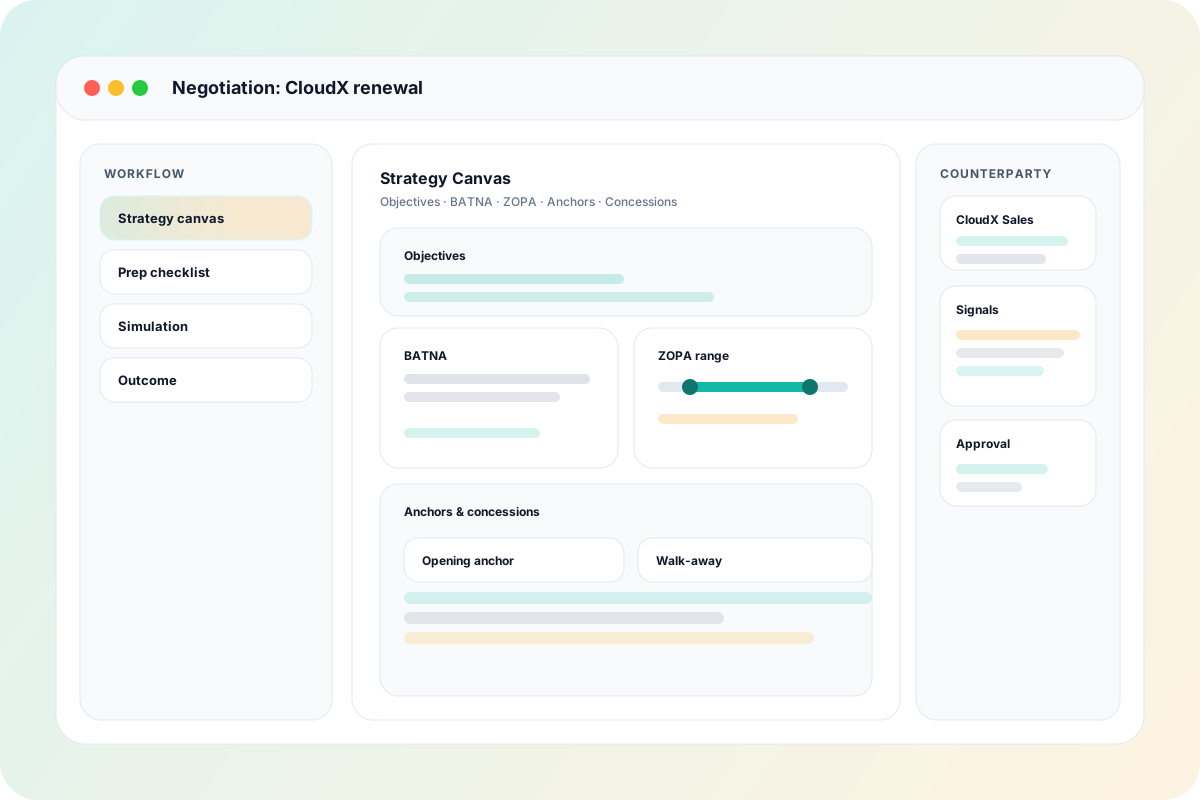
Negotiations.AI helps teams prepare the supplier conversation itself: the evidence, range, trade-offs, objections, approvals, and institutional memory that make negotiations repeatable.
Related category: AI negotiation platform
Quick answer
Procurement negotiation software is the layer that helps teams decide what to ask for, what to trade, when to hold firm, and how to capture the outcome. It complements procurement suites that manage intake, approvals, POs, contracts, and spend visibility.
These examples show how the concept becomes visible inside a real negotiation workflow: intake, evidence, strategy, tactics, simulation, and learning.
Recommended positions, alternatives, and MDO/LAA targets make the strategy easier to approve.
Trade packages connect what the buyer may give to what the supplier must provide in return.
Practice objections and score negotiation behavior before the live meeting.
Capture scorecards, actions, outcome variance, and supplier learning after each round.
Strategy brief
Northstar Packaging renewal
Recommended position
Keep Northstar in the award mix, but make delivered-cost parity the commercial anchor before any share commitment.
Our current position
Apex has credible alternatives, but qualification timing and continuity risks mean the final ask needs clear fallback paths.
Targets aligned to objectives
MDO / LAA60-day payment terms
Alternative path if the primary position stalls.
Phased share commitment
Alternative path if the primary position stalls.
Supplier-funded tooling
Alternative path if the primary position stalls.
Source-to-pay platforms are strong systems of record and workflow. Negotiations.AI is a strategy system for supplier conversations, helping teams plan the negotiation before the meeting and improve the next one after the meeting ends.
Captures BATNA, ZOPA, anchors, concessions, supplier hypotheses, stakeholder constraints, and fallback paths.
Creates approval-ready briefs so finance, legal, executives, and category leaders can review trade-offs quickly.
Preserves what worked, what moved the supplier, and which assumptions should change next time.
Use the same structure across renewals, sourcing events, price increases, SLAs, payment terms, and scope changes.
Capture the supplier, category, business owner, deadline, deal value, and negotiation trigger.
Define the target, acceptable range, walk-away, alternatives, evidence, and open questions.
Stress-test likely supplier responses, concession paths, and decision points before the meeting.
Share a concise decision brief with the people who need to approve commercial and risk positions.
Capture outcomes, supplier behavior, next steps, and reusable guidance for the category playbook.
The value is clearest when the conversation has multiple levers and the cost of inconsistency is high.
Prepare positions using utilization, current pricing, switching cost, and executive constraints.
Build fact-based questions and counter-packages tied to commodity, labor, freight, and margin signals.
Compare cash timing, service levels, remedies, credits, and implementation support as one package.
Better AI negotiation outputs start with the same thing stronger human negotiators use: clear facts, explicit constraints, and a disciplined view of leverage.
Strategy brief
A clear summary of goals, leverage, risks, open questions, and recommended negotiation path.
Trade package options
Multiple give/get packages that compare value, risk, and likely supplier response.
Talk tracks
Short supplier-facing language, questions, and objection responses that a buyer can actually use.
Outcome memory
Meeting notes, decisions, supplier behavior, approvals, and lessons tied back to the deal record.
Understand the human-in-the-loop AI negotiations workflow before comparing feature details.
See how internal and external inputs support negotiation strategy.
Explore the intelligence layer for supplier strategy and analytics.
A buyer guide to negotiation software, sourcing tools, CLM, and AI negotiation platforms.
How AI contract negotiation support goes beyond redlines and CLM workflows.
A practical checklist for enterprise procurement buyers.
A broader negotiation process guide for procurement teams.
No. Sourcing software typically manages events, bids, supplier comparison, and award workflows. Negotiation software focuses on strategy, concession planning, scenario modeling, rehearsal, approvals, and outcome capture.
Yes. Negotiations.AI is positioned as a negotiation intelligence layer that can support teams using existing procurement, contract, and supplier systems.
AI is useful when it structures messy context, finds missing questions, drafts trade packages, simulates pushback, and turns outcomes into reusable memory.
Category teams, sourcing teams, procurement transformation leaders, and Centers of Excellence benefit when they need consistent prep across many supplier negotiations.
Start with a real negotiation, add the facts you trust, and pressure-test the plan before the supplier meeting.