Leadership Paper 2
Scaling Negotiation Expertise
How Leading Procurement Organizations Develop Commercial Capability at Scale
A procurement leadership paper on scaling negotiation expertise through repeatable preparation, strategy, practice, execution, and learning.
Executive summary
Most procurement organizations recognize their best negotiators. Far fewer understand why those individuals consistently achieve better commercial outcomes.
The difference is rarely experience alone. It is the disciplined preparation, strategic thinking, practice, execution, and continuous learning that surround every successful negotiation.
As procurement responsibilities expand beyond price into legal, operational, governance, cyber, and AI-related considerations, organizations can no longer depend on a handful of experts. They must develop negotiation capability across the enterprise.
This paper introduces Negotiation Capability as a repeatable organizational discipline that enables every buyer to perform more like the organization’s best negotiators.
Key takeaway for procurement leaders
The goal is institutional negotiation excellence, not more individual experts. CPOs can accelerate buyers’ progress by making disciplined preparation, strategic planning, execution, and continuous learning an organizational capability.
1. The Capability Gap
Modern procurement organizations are expected to deliver increasingly complex commercial outcomes that impact finance, operations, legal, technology, and even the Chief Executive Office, as the business priorities converge across these groups.
Yet negotiation success often depends on a small number of experienced individuals. When those individuals retire, change roles, transfer, or become overloaded, performance becomes inconsistent.
Most organizations have invested in procurement systems. Few have invested in systematically developing negotiation capability. The challenge is no longer finding experts; it is scaling expertise across the enterprise.
2. Beyond Individual Expertise
Great negotiators are not simply more talented. They consistently follow a disciplined process. They research markets, prepare thoroughly, evaluate alternatives, practice important conversations, negotiate with purpose, and learn from every negotiation.
Organizations that institutionalize these disciplines create consistent commercial outcomes regardless of who leads the negotiation.
3. A New Organizational Capability
Negotiation Capability is an organization’s ability to systematically develop better negotiators through repeatable preparation, strategic planning, execution, and continuous learning. Rather than depending on individual experience, organizations build a scalable capability that improves every negotiation and strengthens the enterprise over time.
4. The Negotiation Capability Framework
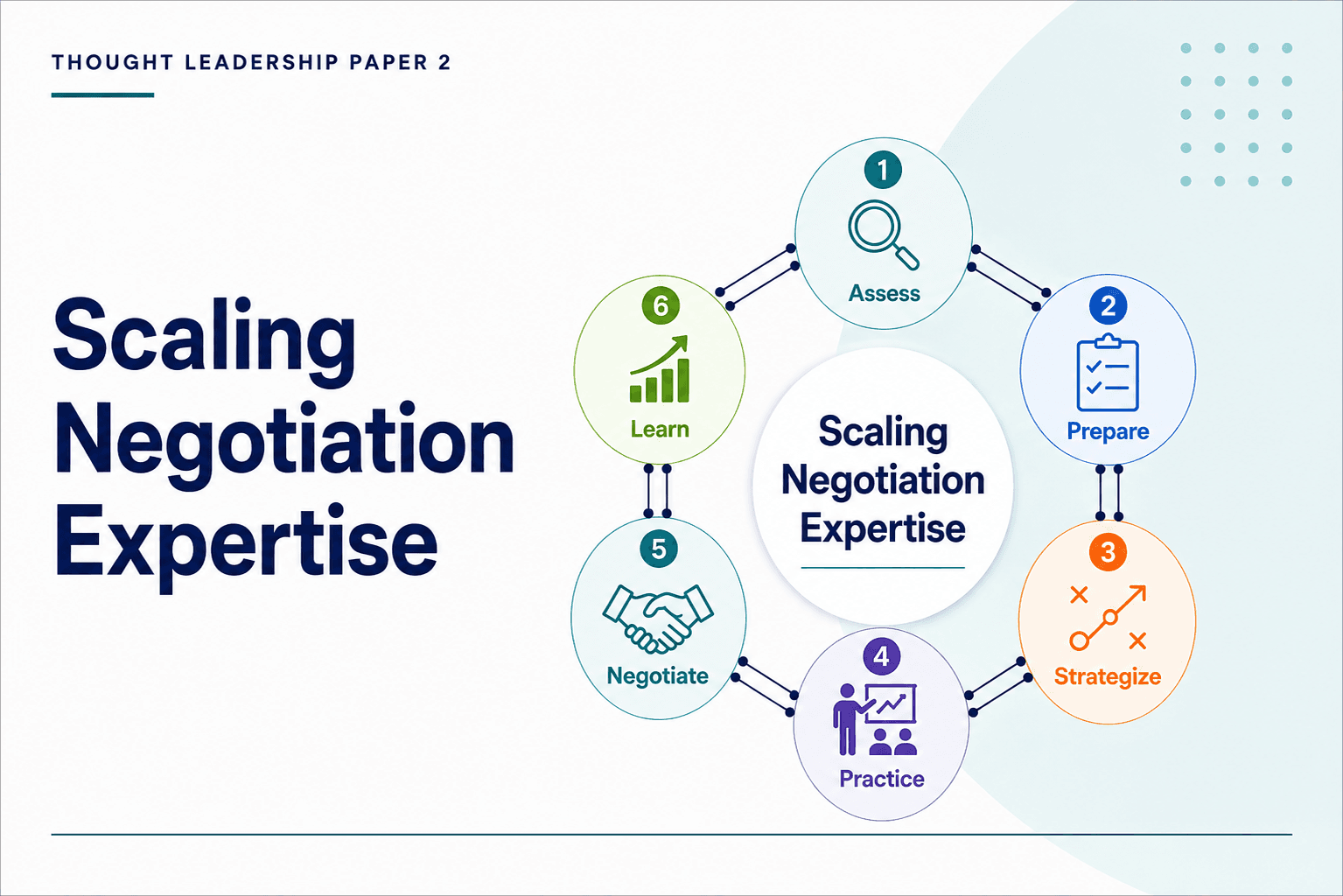
The framework below illustrates the six disciplines that consistently improve negotiation capability across the enterprise:
- Assess
- Prepare
- Strategize
- Practice
- Negotiate
- Learn
Leading procurement organizations develop expertise through repeatable disciplines rather than individual talent.
5. Developing Expertise Across the Enterprise
High-performing procurement organizations do not measure success solely by negotiated savings. They also measure how quickly buyers improve.
Every negotiation is an opportunity to strengthen individual capabilities, expand organizational knowledge, and enhance commercial consistency. Organizations should focus on moving buyers from reactive execution toward strategic negotiation mastery.
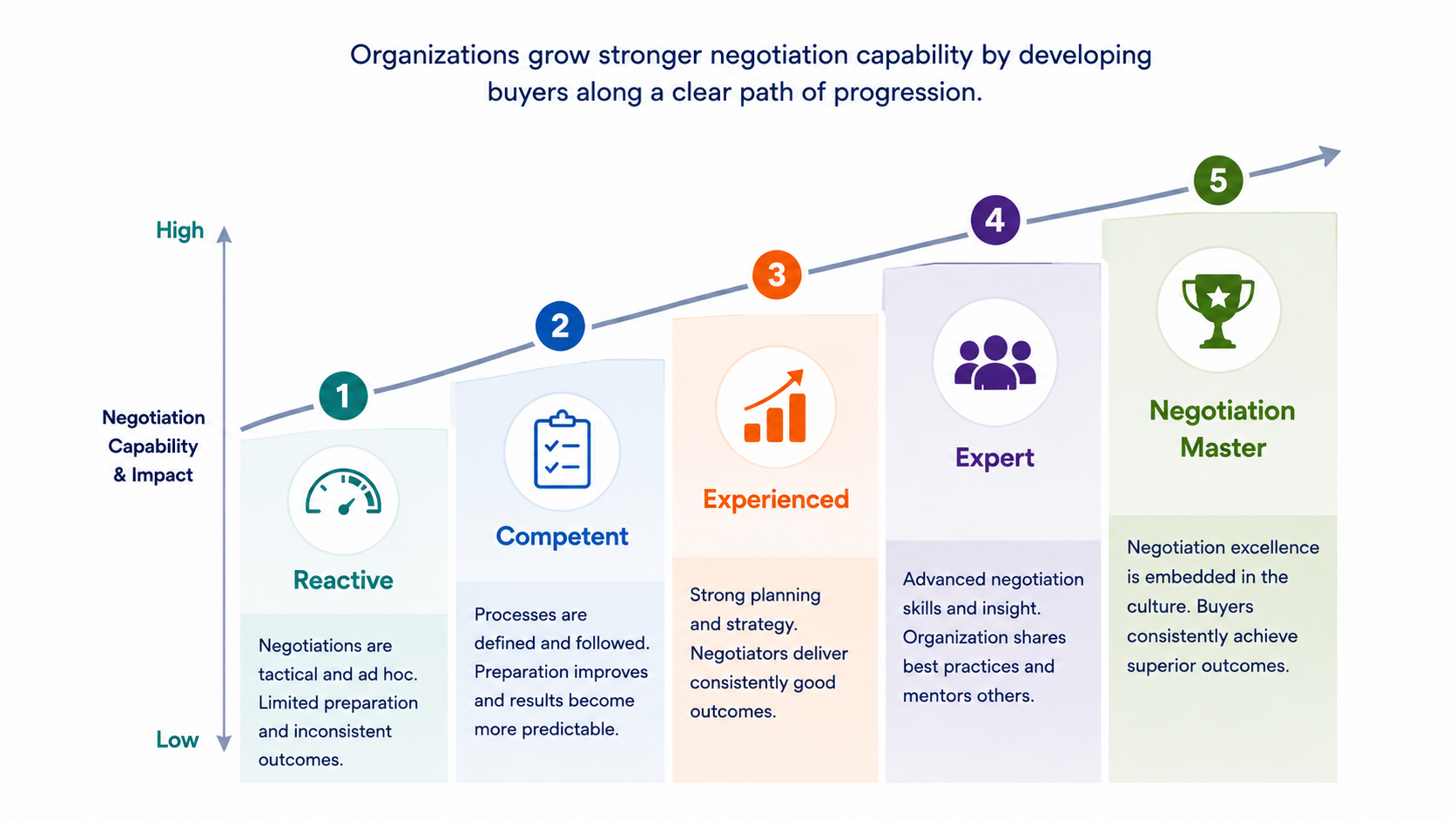
Figure 2. The Negotiation Capability Maturity Curve moves buyers through five stages: Reactive, Competent, Experienced, Expert, and Negotiation Master. Diagram labels remain in English.
The maturity curve describes a clear path of progression:
- Reactive — negotiations are tactical and ad hoc, with limited preparation and inconsistent outcomes.
- Competent — processes are defined and followed, preparation improves, and results become more predictable.
- Experienced — planning and strategy are strong, and negotiators consistently deliver good outcomes.
- Expert — advanced negotiation skill and insight are shared through best practices and mentoring.
- Negotiation Master — negotiation excellence is embedded in the culture and buyers consistently achieve superior outcomes.
Executive Perspective: Focus on accelerating buyers’ progress along the maturity curve. The goal is institutional negotiation excellence, not more individual experts.
Procurement has systems to manage transactions and workflow. Negotiations.AI is building the intelligence layer that enables organizations to prepare for, make, govern, preserve, and improve important commercial decisions in support of buyers.
6. Questions Every Procurement Leader Should Ask
- How dependent are your most important negotiations on a small number of experts?
- How quickly can new category managers negotiate independently?
- Does your organization consistently improve negotiation capability year after year?
- Are negotiation best practices embedded in the organization or in individual people?
7. The Negotiations.AI Perspective
Negotiations.AI is built on the belief that negotiation excellence should be an organizational capability rather than an individual talent. The platform helps procurement teams prepare more effectively, evaluate alternatives, capture negotiation outcomes, and continuously improve organizational capability.
Rather than replacing existing procurement platforms, it helps organizations systematically scale negotiation expertise across the enterprise.