N
Negotiations.AI
Sourcing Strategy

Design the supplier decision before launching the event

A sourcing strategy connects business requirements and market reality to the route to market, competitive structure, evaluation logic, negotiation design, transition plan, and governance needed for a defensible supplier decision.

Design the event around the decision—not the document sequence.

1

Define the commercial decision

A deliberate decision gate—not just another activity.

2

Create credible competitive paths

A deliberate decision gate—not just another activity.

3

Negotiate the award as a package

A deliberate decision gate—not just another activity.

What you leave with

A sourcing strategy built around leverage and choice

Connect market evidence, supplier options, evaluation logic, negotiation design, award conditions, and transition readiness.

The sourcing event should execute the strategy—not discover it

Launching an RFP before resolving requirements, market structure, switching readiness, evaluation logic, and negotiation design pushes strategic choices into a document workflow. A better sourcing strategy decides how competition and information will improve the decision before suppliers are asked to respond.
Demand-defined

Clarify outcomes, specifications, volumes, service, constraints, flexibility, and stakeholder trade-offs before approaching the market.

Market-shaped

Choose the route, lots, timetable, information, and competitive tension based on real supplier-market conditions.

Decision-designed

Connect evaluation, due diligence, negotiation, approvals, transition, and governance to one defensible decision path.

What is a sourcing strategy?

A sourcing strategy defines how an organization will approach a supply market to satisfy a specific business need. It covers demand and requirements, market structure, incumbent position, supplier options, lotting, route to market, competition, evaluation, negotiation, contracting, transition, risk, governance, and the evidence needed to make and approve the supplier decision.

Inside Negotiations.AI

Use AI sourcing strategy to carry market logic into negotiation

The strategy workspace keeps competitive alternatives, award variables, trade packages, and decision authority connected.

Ground outputs in deal context and evidence
Keep humans responsible for review and approval
Carry learning into the next negotiation round
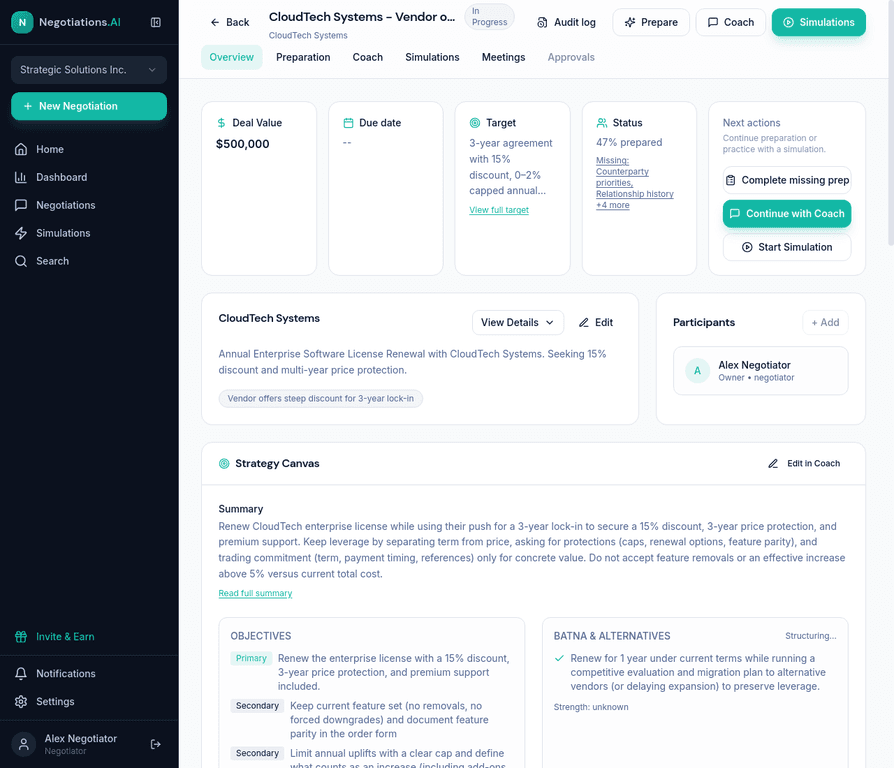
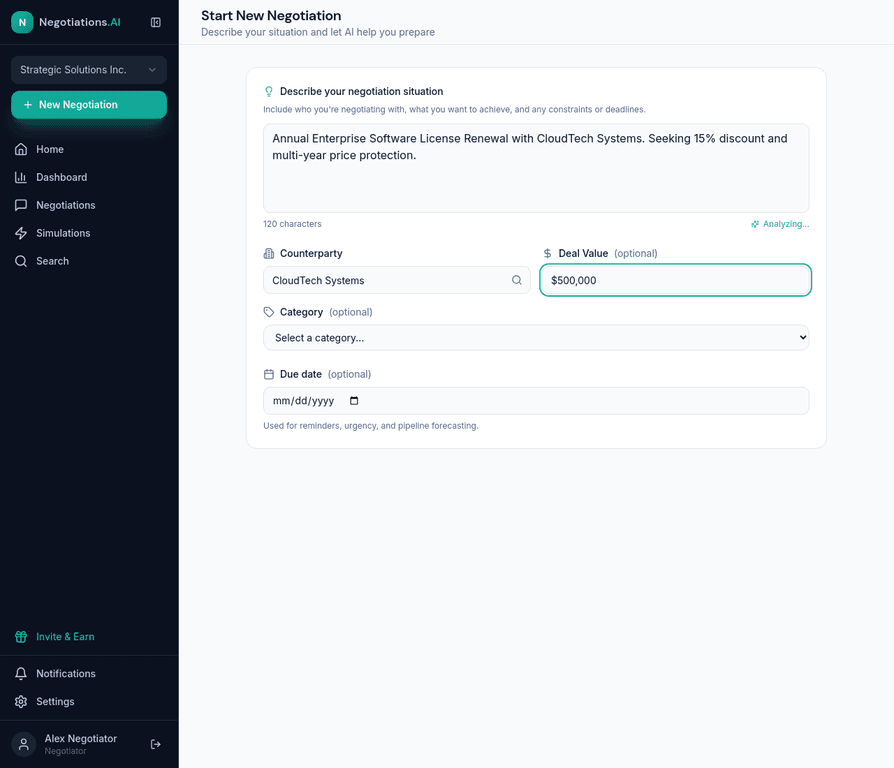
Negotiations.AI guided intake for a new sourcing or supplier negotiation

Structured intake

See how sourcing preparation begins

Start with the business need, counterparty, value, category, and timing before choosing the sourcing mechanics.

Product output

Requirements and decision intake

Capture outcomes, demand, specifications, constraints, incumbent context, stakeholders, risk, and approval needs.

Product output

Supply-market evidence

Organize supplier capability, capacity, economics, benchmarks, alternatives, switching barriers, and market risks.

Product output

Route-to-market design

Compare sourcing options, lots, competition, information, evaluation, negotiation, transition, and governance.

Product output

Negotiation and award plan

Turn proposal evidence into clarification questions, packages, scenarios, approvals, and a defensible award path.

Design the sourcing path

A five-stage sourcing strategy framework

Resolve the commercial logic before designing documents, events, and supplier communications.

  1. 01

    Define the business need

    Clarify outcomes, demand, specifications, service levels, constraints, stakeholders, timing, incumbent context, and decision authority.

  2. 02

    Analyze the supply market

    Assess supplier capability, capacity, economics, competition, substitutes, innovation, risk, switching barriers, and information gaps.

  3. 03

    Choose the market approach

    Decide lots, supplier coverage, RFI or RFP design, auction suitability, timetable, confidentiality, and competitive structure.

  4. 04

    Design the decision

    Set evaluation logic, evidence requirements, normalization, due diligence, scenarios, negotiation plan, approvals, and records.

  5. 05

    Plan award and transition

    Prepare contracting, implementation, continuity, incumbent exit, performance governance, benefit tracking, and lessons learned.

Use it when

Sourcing situations that require different strategies

A good strategy adapts the process to the market and decision instead of forcing every purchase through the same event design.

Incumbent renewal

Test whether competition is credible, separate transition cost from inertia, and use performance and future demand to shape leverage.

New or uncertain requirement

Use market discovery, outcome-based requirements, demonstrations, pilots, scenarios, and staged commitments to reduce uncertainty.

Supply-constrained category

Prioritize capacity access, resilience, allocation, specification flexibility, demand visibility, contractual protection, and alternatives.

Multi-supplier strategy

Design lots, shares, interoperability, governance, switching mechanisms, performance incentives, and competition after award.

Ground the recommendation

Evidence behind a defensible sourcing strategy

The strategy should show how demand, market evidence, supplier capability, economics, risk, and switching reality shaped the chosen approach.

Demand and requirements

Outcomes, specifications, volumes, locations, service, flexibility, demand forecast, constraints, and stakeholder priorities.

Market structure

Capable suppliers, concentration, capacity, cost drivers, substitutes, innovation, entry barriers, regulation, and geographic exposure.

Supplier evidence

Capability, references, performance, financial resilience, delivery model, risk, pricing logic, dependencies, and improvement potential.

Decision and transition

Evaluation logic, total cost, scenarios, due diligence, switching effort, implementation, continuity, approvals, and governance.

Choose deliberately

Common routes to market and when they fit

The route should reflect uncertainty, supplier-market depth, requirement maturity, switching readiness, and the dimensions on which value can be compared.

ApproachPrimary jobHuman roleBest fit
Direct negotiationImprove an incumbent or constrained-source agreementBuild leverage, test evidence, design trades, and govern authorityRenewals, sole source, urgent continuity, or highly constrained markets
RFI then RFPLearn the market before requesting comparable proposalsRefine requirements and decide how evidence changes the eventUncertain solutions, unfamiliar markets, or evolving specifications
Competitive RFPCompare qualified solutions against structured requirementsProtect evaluation integrity and negotiate total valueMultiple capable suppliers and meaningful non-price differences
AuctionCreate transparent price competition on comparable offersQualify suppliers and define rules, lots, floors, and safeguardsClear specifications, sufficient competition, and low switching ambiguity

How the framework protects decision quality

The framework records how evidence changes requirements, market approach, evaluation, negotiation, award, and transition. It separates supplier assertions from verified facts and requires material assumptions, exclusions, conflicts, and approval decisions to remain visible.

Keep exploring

Related guides and product paths

Use the next most relevant resource instead of starting another search from scratch.

Common questions

Sourcing Strategy FAQ

What is a sourcing strategy?+

A sourcing strategy is the planned approach for satisfying a business need through a supply market. It defines requirements, market engagement, supplier competition, evaluation, negotiation, contracting, transition, risk, governance, and the evidence used to approve the decision.

What are the main steps in strategic sourcing?+

Define the business need, analyze demand and the supply market, choose the route to market, engage and qualify suppliers, evaluate proposals, negotiate, approve the award, contract, transition, manage performance, and capture learning.

Is an RFP a sourcing strategy?+

No. An RFP is one possible market-engagement mechanism. The sourcing strategy should determine whether an RFP is appropriate and define requirements, competition, information, evaluation, negotiation, transition, and governance before the document is launched.

How can AI support sourcing strategy?+

AI can organize demand, research markets and suppliers, compare evidence, expose gaps, draft event materials, normalize responses, model scenarios, and prepare negotiation questions. Humans should own requirements, evaluation logic, supplier selection, commitments, exceptions, and approvals.

Bring one real negotiation

Build a sourcing path that creates better choices.

Turn category context and supplier evidence into an executable event and negotiation strategy.